
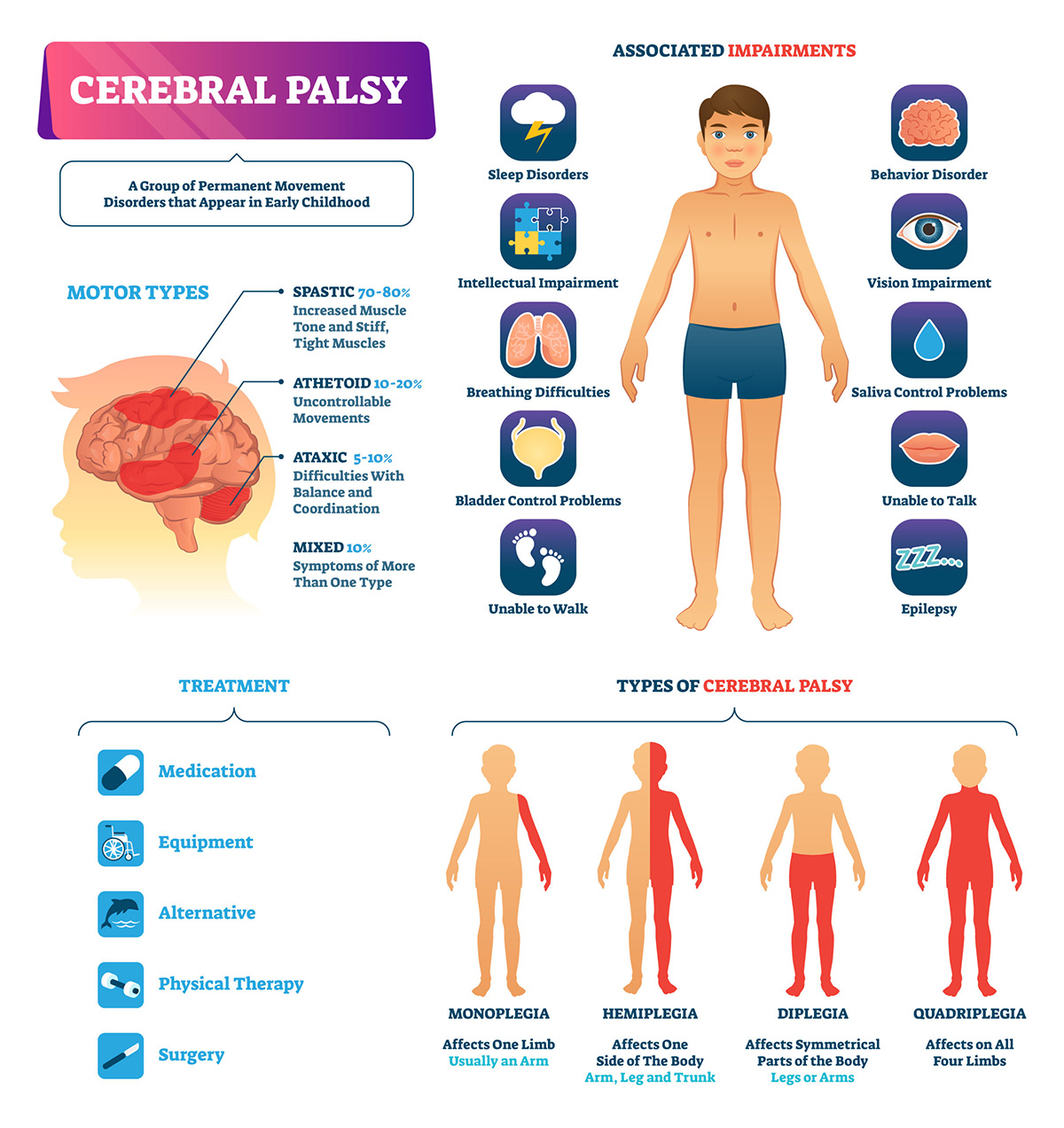
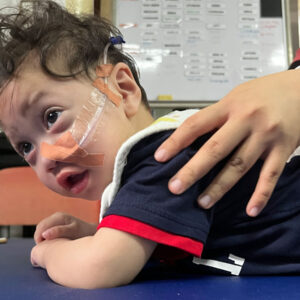
Cerebral Palsy (CP) is a disorder of movement and posture due to damage to or failure to develop normally in a small part of brain controlling these activities. The brain is not able to send proper signals to the muscles, affecting gait and other movement.
Sometimes children and adults with CP also have learning difficulties or problems with sensory abilities such as hearing and sight.
CP is non-progressive, meaning that it does not get worse over time. CP is not a disease and it certainly is not catching.
CP can take many forms. Some people are so lightly affected that they appear to have no obvious disabilities while others may be clumsy in their gait, can affect one side of the body or both sides or only both lower limbs which is more common in children born prematurely, or they may have difficulty with their hands or with muscles involved in speech, chewing and swallowing. Some individuals with more severe forms of CP are unable to stand or sit and may require wheelchairs or special equipment.
CP often occurs before birth or sometime during delivery. It is estimated that a child with CP is born once in 500 live births, without any distinction of sex, race, maternal age or social background. CP can also occur during the early years of a child’s development as the result of brain damage in the first few months or years of life, brain infections such as bacterial meningitis or viral encephalitis, or head injury from a motor vehicle accident, a fall or child abuse. The cause in about a quarter of CP patient remains unknown even in today’s medical practice.
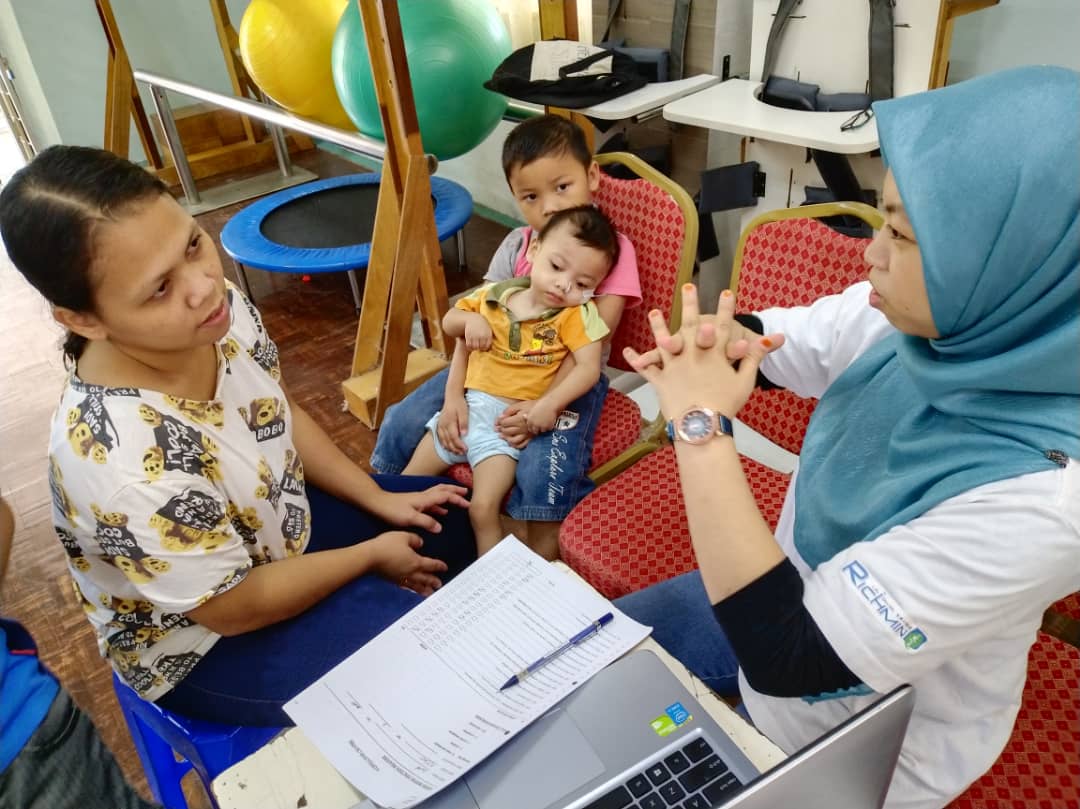
CP is not curable, but it is treatable. The course of treatment depends on type of CP, severity of symptoms and at what stage treatment is initiated. Treatment includes physical therapy to develop stronger muscles, occupational therapy (helping participants to develop fine motor skills for specific tasks such as dressing, feeding and writing), and speech-language therapy which focuses on developing communication skills and chewing, swallowing techniques.
Surgery, medication, orthotic devices (such as braces), communication devices (such as printed communication cards and boards) and computer technology are also widely used in treatments.
Alternative therapies such as acupuncture have also shown some promise in treating symptoms of CP , but again, it depends on the type of CP, severity of symptoms and how early treatment is initiated.
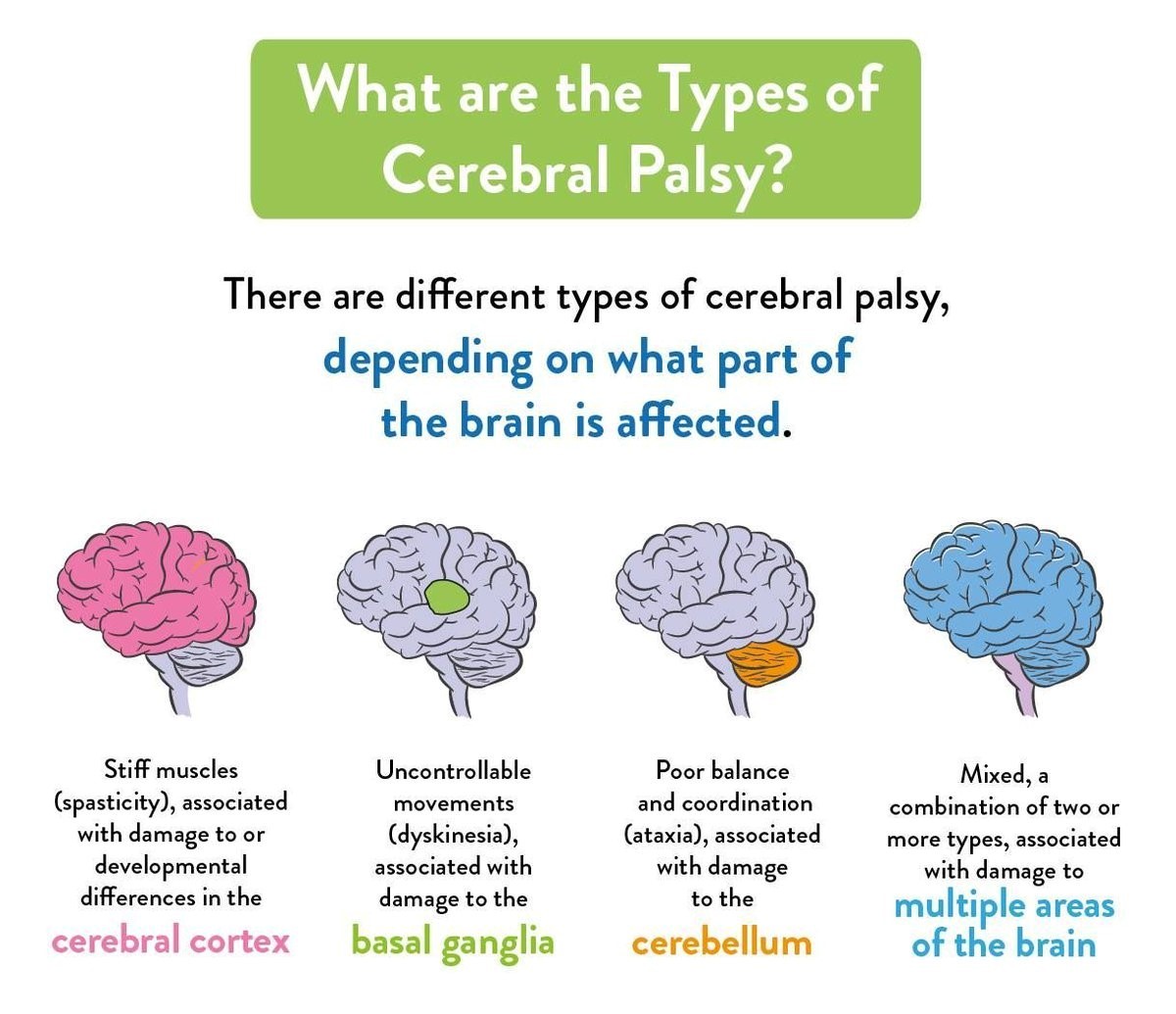
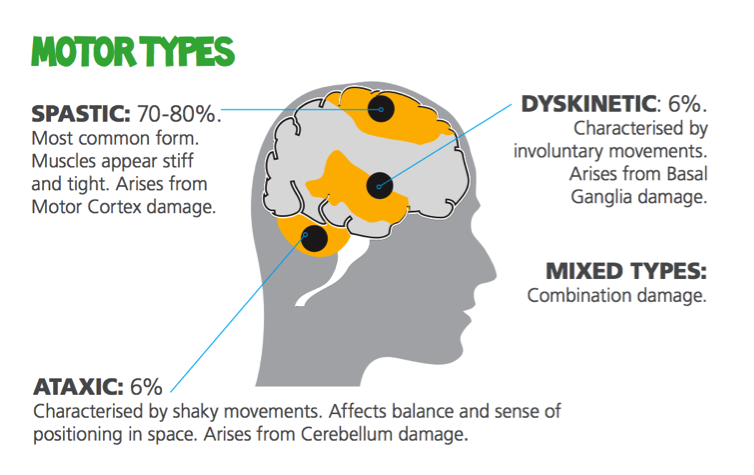
The four main types of CP are : spastic, dyskinetic, ataxic, and mixed.
1. Spastic
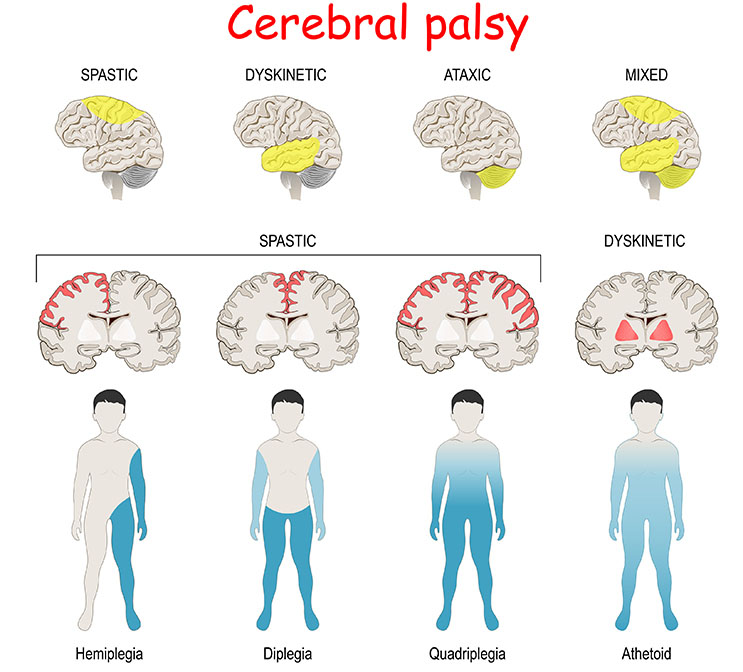
70-80% of people with CP have spasticity. People with spastic CP are unable to relax the muscles in some parts of their body and face higher resistance to movement. It is caused by damage to a region of the brain that controls voluntary muscle movements such as riding a bike or walking. Spastic CP can be further described by parts of the body that are affected.
a. Spastic hemiplegia – One side of the body (e.g. one arm and one leg) is affected.
b. Spastic diplegia – Both sides of the body are affected (predominantly the legs)
c. Spastic quadriplegia – The whole body is affected (arms, leg, face and trunk) and is the most severe form of spasticity.
2. Dyskinetic
People with dyskinetic CP have slow, involuntary muscle movements that they cannot control and can change within a single day or from day to day. Body parts that can be affected are the arms, legs, face and tongue.
3. Ataxic
People with ataxic CP have problems with balance and perception of depth. They are usually unsteady when they walk, may fall frequently and have problems with actions that need a lot of control such as writing. In some cases when they walk, their speech is not clear.
4. Mixed
Some people who have more than one type of CP are known to have mixed CP.
There is no cure for CP but treatment will improve the patient’s capability. Many children can go on to live near-normal adult lives if their disabilities are properly managed.
Early intervention and treatment will give the patient a better chance of overcoming their developmental disabilities.
Since patients tent to have varying symptoms and there are no two patients that are affected by CP in the same way, individual treatment programs are tailored for the needs of a patient.
A full detailed assessment of the child’s limitation and abilities, in combination with other forms of treatment such as
• Physiotherapy
• Speech and language therapy
• Medication
• Surgery
Will minimize other problems that may develop as the child gets older. This will help child achieve their fullest potential in posture control, body movement, speech and language and towards living near normal adult lives in the future.
Physiotherapy
Physiotherapy is probably the most essential part of the treatment plan for children with CP. The key aim of physiotherapy is to encourage children to walk and move as normally as possible. This form of treatment assists children in developing muscular control, better balance and mobility, and becoming as physically independent as possible.
It helps to strengthen the muscles, improves physical stamina and fitness, prevent imbalances, weakening and wasting of under-used muscles of the child.
Regular movement helps to stretch the muscles. This limits shortening of muscles, promotes faster muscle growth and reduces the risk of developing can delay the immediateneed for surgery or even eliminate the need for it completely.
Medications
People with CP begin by having muscle spasms (muscles that are unable to relax) before it leads to permanent muscle shortening (fixed contractures). Hence, if there is early intervention at this stage, it will slow or reduce progression to permanent muscle shortening.
The agents most frequently used to treat muscle spasms are bacflofen, diazepam and dantrolene that are also used after surgery. The medication act on all muscles in the body and are usually given to patients by mouth. The most common side effect of all three medication is drowsiness. In some cases, getting treated early with medications can delay the immediate need for surgery or even eliminate the need for it completely.
Surgery
Although surgery is not always necessary, there is sometimes the need for it to:
- Reduce muscle spasms (loosen tight muscles)
- Correct fixed contractures
- Improve the growth and development of muscles
- Cut nerves that are affected by uncontrollable movements
There are several types of surgery for patients with CP and some tests are required before surgery, to determine the type of surgery that is best suited for the patient. After surgery, the patient is expected to experience improvements in walking and have a better sense of balance.
- Observation by doctor at birth using a series of tests.
- Sign of delays in developing movement, posture and balance necessary for sitting and standing after brain nerves and muscles are fully developed.
Children with spastic leg muscles may adopt abnormal style of walking due to their inability to control and relax certain muscle.
It is common to find that such children have excessive bending at the knees and may trip frequently, stumble or fall when they toe walk.
The need to toe walk or bend at the knees is caused by shortened muscles, hardened joints and bone deformities. If these shorthened muscles (called fixed contractures) of the arms or legs are left untreated, it can lead to differences in length between the arms or legs and muscle.
Since the growth of muscle is often slower than the growth of the bone, this will gradually lead to differences in length between the arms or legs and muscle.
Therefore, early intervention is crucial in preventing the permanent development of these abnormal structures.
What is Boccia?
It is called “Bocce Ball” in Taiwan, and is also translated as “Bocce Ball” in other Chinese-speaking regions. Boccia (BOCCIA) was originally a throwing game in ancient Greece. After correction, it became an activity that uses very few body movements but requires the use of strategies and skills. It is a competition designed for physically and mentally handicapped people with severe movement control difficulties.
In 1984, it listed as one of the Paralympic Games competitions; and in 1989, Cerebral Palsy International Sports and Recreation Association (CPISRA) was established. The meetings were held to discuss the competition rules and competition system. In 2013, Boccia International Sports Federation (BISFed) take over the matters related to cerebral palsy. In the past ten years, Boccia have been actively promoted all over the world, including the schools (special education schools), medical rehabilitation institutions, social welfare organization, and rehabilitation institutions for the physically and mentally handicapped people by combining the three major fields of medical care, education, and sports.
Besides cerebral palsy, the sport is expanded to other people with physical disabilities (muscle atrophy, spinal cord injury, rare diseases, etc.), mental disorders, visual impaired groups, and even senior citizen and children. We look forward to the sport becoming one of the national sports.
Boccia Rules and Regulations
- The BOCCIA court is a hard, flat ground of 6 meters X 12.5 meters.
- The game is divided into red and blue teams. Each team may be made up of one, two or three players, played individually, in pair or in team.
- The red team first throws the white target ball, and throws the first red ball.
- The blue team throws the first blue ball.
- The team that is further from the white target continues to throw the ball.
- The game ends when all colored balls are thrown.
- Scoring: The team that is closest to the white goal ball wins, every color ball that is closest to the opponent’s target ball is counted as one point. (For example, if the red team wins, it is the red ball that is closer to the blue ball than the nearest target ball will receive points).
- End of a game (Four or six innings), the team with the higher accumulation points from each inning wins the game.
Boccia Grading System
According to the contestants’ muscle tension, coordination ability or muscle strength, they are divided into different groups to compete.
BC1 athletes have severe activity limitations affecting their legs, arms and trunk, and typically dependent on a powered wheelchair.
BC2 players have better trunk and arm function than those in class BC1. The abilities of their arms and hands often allow them to throw the ball overhand and underhand and with a variety of grasps.
BC3 class athletes have significant limitations in arm and leg functions, and poor or no trunk control. They are unable to consistently grasp or release the ball and are unable to propel the ball consistently into the field of play and allowed to use a ramp with the help of a Sport Assistant.
BC4 class contains players with non-cerebral impairments that also impact their co-ordination.
BC5
For conditions of both Cerebral and Non Cerebral origin
Cerebral: Quadriplegic, Triplegic, Severe Hemiplegic.
Non Cerebral: impairment may result from lack of muscle strength, limitation in range of movement or limb shortening
May use either a manual or power wheelchair
May be able to walk with assistance or using a walking aid over short distances
Has a more active throw as a result of increased trunk control and/or upper limb muscle strength
BC5 athletes are not eligible for an on-court assistant.
Or non-cerebral hemp athletes.
Introduction to Sarawak Boccia Association (Persatuan Sukan Boccia Sarawak)
History
Sarawak government officially introduced Boccia sport in 2018 to enable people with cerebral palsy and lower body paralysis represent Sarawak in national or international competitions. At that time, as Wishesland is a special support center for children with cerebral palsy, the government contacted the president of Wishesland through Sarawak Boccia coach, hoping that Wishesland is able to select suitable children to receive training to represent Sarawak in the 19th Malaysian Paralympic Games held in Ipoh, Perak.
Since Boccia is a very new sport for Wishesland and parents, everyone felt at a loss as to what to do and did not know where to start. In order to unite relevant people in the field such as the parents, Wishesland, the government, coaches, Sarawak Boccia Association was established on June 7, 2018.
The purpose of the Association is to promote Boccia to the people of Sarawak, especially those with cerebral palsy as well as people with lower body paralysis so that they can have an activity to show their talents. In addition, the Association also actively promotes Boccia to the clubs and community leisure centers, so that it becomes one of the leisure activities for the club members and senior citizens.
Activities
1.Bocce training
2. Talent identification and development
3. Boccia sport awareness campaign
4. Boccia referee course
5. Boccia Coach training
Contact No
019-2288419
Mr. Chi Poh Yung, Secretary, Sarawak Boccia Association
Email
bocciasarawak@gmail.com
For further information, please browse www.bisfed.com

Mailing Address
Lot 1446, No. 198F, Jalan Field Force, Off Jalan Batu Kawa, 93250 Kuching Sarawak
Operating address
No. 1, Jalan Crookshank, 93000 Kuching Sarawak
Contact No
082-252210, 019-2288419 (Mr. Chi)
Email Address
wisheslandinternational@gmail.com
Facebook
Wisheslandinternational